JAGJAGUWAR

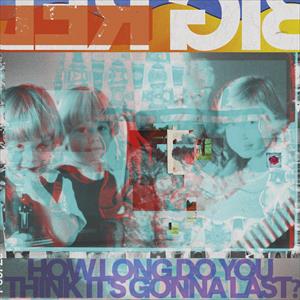
Big Red Machine - How Long Do You Think Its Gonna Last Big Red Machine

£22.99
Tax included.
Genre: Rock and Pop.
2 LP 1. Latter Days (feat. Anaïs Mitchell) 2. Reese 3. Phoenix (feat. Fleet Foxes and Anaïs Mitchell) 4. Birch (feat. Taylor Swift) 5. Renegade (feat. Taylor Swift) 6. The Ghost of Cincinnati 7. Hoping Then 8. Mimi (feat. Ilsey) 9. Easy to Sabotage (feat. Naeem) 10. Hutch (feat. Sharon Van Etten, Lisa Hannigan and Shara Nova [My Brightest Diamond]) 11. 8:22am (feat. La Force) 12. Magnolia 13. June’s a River (feat. Ben Howard and This Is The Kit 14. Brycie 15. New Auburn (feat. Anaïs Mitchell) Ever since childhood, learning to play various instruments in a suburban Cincinnati basement alongside his brother Bryce, Aaron Dessner has consistently sought an emotional outlet and deep human connection through music — be it as a primary songwriter in The National, a founder and architect of beloved collaboration-driven music festivals, or collaborator on two critically acclaimed and chart-topping Taylor Swift albums recorded in complete pandemic-era isolation at his Long Pond Studio in upstate New York, among many other projects. Through it all, Dessner has brought together an unlikely community of musicians that share his impulse to connect, celebrate and, most of all, process emotion and experience through music. This generous spirit and desire to push music forward has never been more deeply felt than on Big Red Machine’s “How Long Do You Think It’s Gonna Last?,” the second album from Dessner’s evermorphing project with Bon Iver’s Justin Vernon. In 2008, while assembling material for the charity compilation “Dark Was the Night,” Dessner sent Vernon a song sketch titled “big red machine”. Vernon interpreted “big red machine” as a beating heart and finished the song accordingly — a metaphor Dessner says “still sticks with me today. This project goes to many places and is always on some level about experimentation, but it shines a light on why I make music in the first place, which is an emotional need. It’s one of my therapies and one of the ways I interrogate the past.” Released in 2018, Big Red Machine’s self-titled debut album evolved from improvisation and what Dessner calls “structured experimentalism,” with an ear toward building tracks that would work well in a live setting alongside visual elements. When Dessner and Vernon started the Eaux Claires Music Festival in 2015, they staged the original “Big Red Machine” as an improvisation-based performance piece. They later took that show to the PEOPLE collective’s Berlin residency and festival, and to Dessner’s Haven Festival in Copenhagen. “Big Red Machine started as this thing we would do for fun, and we fell in love with the feeling of it,” says Dessner.” Vernon agrees: “I remember it feeling really easy, but we never knew what would happen. It was exciting. As time went on, we just kept doing things together. And our friendship has grown strong, alongside all the collaborative stuff.” New Big Red Machine material began taking shape in spring 2019, when Vernon came to visit Dessner at Long Pond. The first week produced songs such as “Reese,” “8:22am” and eventual album opener “Latter Days,” a haunting number sung by Vernon and Anaïs Mitchell that set the emotional tenor for what was to come. “It was clear to her that the early sketch Justin and I made of Latter Days was about childhood, or loss of innocence and nostalgia for a time before you’ve grown into adulthood — before you’ve hurt people or lost people and made mistakes. Anaïs defined the whole record When she sang that, as these same themes kept appearing again and again,” Dessner says. In the ensuing months, Vernon and Dessner would meet up when they could, and in the meantime, Dessner developed the existing material and wrote new instrumental tracks which he sent Vernon, always eager to hear what he would receive back. “Justin is incredibly gifted, but he’s also disruptive in the best way,” says Dessner, pointing to the first note of the song “Birch” as a prime example. “It’s absolutely brilliant, but it was very surprising when I heard it the first time. I can’t tell you what that interval is. There are many moments working with him where your head hits the wall in amazement like that.” In the early stages of the pandemic, Swift approached Dessner to work with her on what would become the sister albums “folklore” and “evermore.” Dessner describes this period as a “creative blur,” during which he’d be writing material for Swift and Big Red Machine simultaneously. “I think this was an intense growing period for me, I was learning so much from Taylor and the process. Along the way, I shared all of our unfinished Big Red Machine songs with her and she really found them inspiring and gave me so much positive feedback and encouragement,” he says. “I think that helped me realize how connected this Big Red Machine music was to everything else I was doing and that I was always supposed to be chasing these ideas. I was finding new sounds and ways of working through these songs. I just hadn’t been able to finish them. So, I did.” Beyond Vernon and Swift’s encouragement, many of Dessner’s previous collaborators and friends show up for him here, continuing the reciprocal exchange of ideas that has come to define his creative community. Songs feature guest vocals and writing contributions from artist friends including Fleet Foxes’ Robin Pecknold (“Phoenix”), Ben Howard and This Is The Kit (“June’s a River”), Naeem (“Easy to Sabotage’), Sharon Van Etten, Lisa Hannigan and My Brightest Diamond’s Shara Nova (“Hutch,” a tune inspired by Dessner’s late friend, Frightened Rabbit frontman Scott Hutchison) and Swift herself (“Birch” and “Renegade,” the latter an instant-classic Taylor earworm summed up by the poignant lyric “Is it insensitive for me to say / get your shit together so I can love you.” The song was recorded in Los Angeles at the Kitty Committee studio in March 2021, the same week when Swift and Dessner took home the GRAMMY for Album of the Year for “folklore.”) “This is all music I generated, but it is interesting to hear how different people relate to it, or how different voices collide with it,” Dessner says. “That’s what makes it special. With everyone that’s on this record, there’s an openness, a creative generosity and an emotional quality that connects it all together.” As he continued writing prolifically on his own, Dessner noticed a theme emerging -- the idea of sitting with the uncomfortability of personal and family darkness from his childhood and reflecting on how emotional issues he dealt with growing up have reverberated through his adult life. It became clear that some of these he’d need to sing himself; songs such as “The Ghost of Cincinnati” and “Magnolia” address the disintegration of marriage and family and mental health, asking pointed questions of himself and those closest to him. “Brycie” is an ode to his aforementioned twin and National bandmate, who picked up on the musical vibes immediately when Dessner played the song for him for the first time backstage at a National show in Washington D.C. “He picked along to it with me and it immediately sounded like Aaron and Bryce playing the guitar in the basement as kids, which was my intent,” Dessner remembers. “The words mean a lot to me. It’s about my childhood with Bryce, and how I had pretty severe depression in high school. He was the one who kept me going and took care of me until I was back on my feet. I’ve lost close friends to depression and this song is about how important it was that Bryce was there for me at that time and is still here.” In addition to being one of the more lyrically significant tracks on the album, Dessner says singing it himself felt like an important act of self-acceptance. “I always sing under my breath when I write music, but I usually hand it off to [National vocalist] Matt [Berninger] or others” he says. “When you’re in a band for so long and somebody else is that person, you come to rely on it and I’ve always loved Matt’s voice and his words. But singing ‘Brycie’ myself helped rewire my brain to realize that maybe Big Red Machine is the project that not only enables me to create songs with other people, but also sometimes finish songs on my own.” Recalling sessions at Sonic Ranch in Texas when Dessner recorded his vocal takes, Vernon says, “Aaron showed me ‘Brycie’ a couple years ago now. I was like, this is beautiful, and you should do more singing. Not only would it be good for the future of your songwriting, but your voice sounds really good to me. It was exciting to see him flourish in that way — to now be a part of that process and realize the hardships in that and also the victories. On this record, he’s leading the charge, wholly and completely.” Musically, “How Long Do You Think It’s Gonna Last?” features what Dessner calls maybe the “clearest distillation” of his varying songwriting and production styles. Songs like “Reese,” the Dessner-sung “Magnolia” and the elegiac “Hutch” are built on the kinds of tear-jerking piano melodies millions of fans have come to love from The National, but then move at their own pace toward unusual sonic destinations. “Aaron’s greatest gift as a collaborator is his ability to evolve and experiment with the emotional sound that is so natural to him,” Vernon says of the material. Elsewhere, the dream-like “Hoping Then” sets layered vocals by Vernon, Dessner and Hannigan (“It’s the on the edge of why I can’t sleep soundly”) atop chopped and phased violin lines, programmed drums and countermelodies played on a rubber bridge guitar. His brother Bryce’s orchestration ebbs and flows throughout this song and many others. The main instrumental track of the chugging, groovy “Easy to Sabotage” was stitched together from two different live recordings and later enveloped in warm keyboard textures and the head-nodding vocals of Naeem. “It just feels alive and electric, and it just happened,” Dessner says of the song. That sense of shared experience extended to the new album’s title, which was coined by Swift after Dessner told her he wasn’t sure what to call the new album. Intuitively summing up the themes, she suggested titling it “How Long Do You Think It’s Gonna Last?,” a question which she pointed out could refer to multiple subjects addressed therein: “childhood, family, marriages, a depression, a losing streak, a winning streak or a creative streak. Taylor saw it all so clearly,” Dessner says. “A year ago, we’d never even worked together. It’s so cool that this community keeps extending and that everyone who contributed to this album connected so naturally to the emotions at the heart of the music.”
Format: Vinyl LP
Condition: Brand New
Release date: Aug 27, 2021
Catalogue number: JAG415LP-C1
Barcode: 0656605241531
SKU: REL-00428

Pickup available at Cambridge

Usually ready in 24 hours. Unless it's a Pre-Order

Format: Vinyl LP

Product information

Shipping

We aim to keep postage costs as low as possible while making sure your records arrive safely. All orders are packed securely using Defenda MusicMax stiff cardboard mailers, with plenty of “FRAGILE” tape, to provide the best protection in transit.

Shipping costs are calculated automatically at checkout based on the weight and destination of your order, along with packaging materials.

We send most orders via Royal Mail tracked services. For larger or heavier orders, we may use a courier service or split your order into multiple parcels to ensure it arrives safely and efficiently.

Pre-orders

Any items ordered alongside a pre-order item will be held back and posted alongside your pre-order. If you’d like them sent individually, please make separate orders.

On the subject of pre-orders, please note than release dates can change (sometimes not until the scheduled release date). Please keep an eye on our website

Returns

Returns Procedure

If you wish to cancel or return an order, you need to notify us by email (quoting your order number), and wait for us to get back to you before returning goods.

We will email you with instructions and a returns reference number. When returning items to us, you will need to take reasonable care to ensure they are not damaged in transit and that they are labelled clearly with the correct address & reference number (as provided by us) :
Relevant Record Café,
260 Mill Road
Cambridge,
CB1 3NF.

We reserve the right to not process returns sent to us without prior permission.
It’s your responsibility to retain possession and to take reasonable care of the goods in the period prior to return and until you send them back to us.

Your Right To Cancel An Order

Your right to cancel your order starts from the moment you place the order, and ends 14 days from the time you receive your order.

Non-Faulty Products

If you wish to return a product because it’s unwanted or it was ordered in error, please follow the returns procedure (see above).
We’ll happily accept a return as long as the product is still in its original shrink-wrapped packaging and is completely undamaged. You have 14 days from when you receive your order to notify us that you wish to return your order.

By opening a sealed product in any way (or using any digital download code accompanying your order), you waive your right to cancel or return your order.

Obviously we’d rather offer you store credit (in the form of a gift card), but if you’d prefer a refund, we promise to get this sorted within 14 days of receiving your return.

Please take care when ordering!

Faulty Products

If you believe you have purchased a faulty or damaged record, please follow the returns procedure (see above).

Once we receive your record, it will be tested by a member of staff in store.
If your record is deemed as faulty, you will be entitled to a refund, swap or store credit (to the same value as your initial purchase).

If this record is not deemed as faulty, we will not cover any additional postage and packaging costs incurred by either you or us, and we will not be able to offer you a refund, store credit or swap.

Basically, please be absolutely certain the record you have purchased is faulty before following the returns procedure. If possible, we suggest testing the record on different turntables and weighting the tone arm differently.

Steepletone and Crosley Record Players

After having several “faulty” records returned to us (that in actuality had nothing wrong with them), we cannot guarantee that any records we sell will play correctly Crosley or Steepletone branded record players.

Recently Viewed Products